
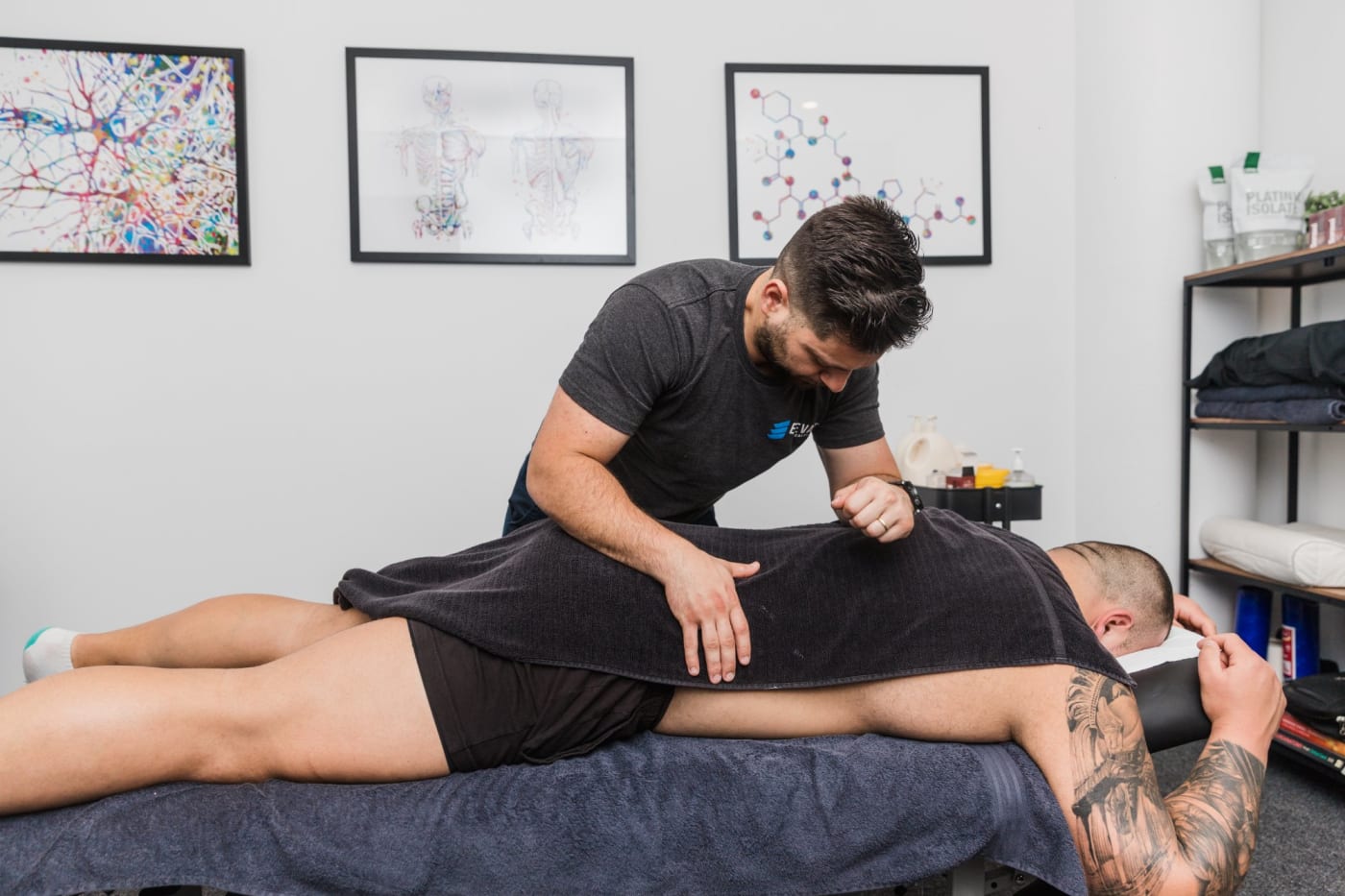
"Should I rest or train through it?" is one of the most common questions in sports medicine — and the answer is almost never as simple as yes or no.
The Problem with Complete Rest
Complete rest leads to rapid deconditioning — muscle atrophy begins within 72 hours of immobilisation, and cardiovascular fitness degrades within days. For most musculoskeletal injuries, relative rest combined with appropriate movement produces significantly better outcomes than complete rest. The updated framework is PEACE & LOVE (Protection, Elevation, Avoid anti-inflammatories, Compression, Education, Load, Optimism, Vascularisation, Exercise) — emphasising early, graded movement over passive rest.
When to Rest Genuinely
Complete rest is appropriate for stress fractures, acute muscle tears (grade 2–3), immediately post-surgery, severe ligament tears with instability, and any injury where weight-bearing causes sharp, worsening pain.
When to Modify and Keep Moving
For most musculoskeletal conditions — tendinopathies, muscle soreness, mild ligament sprains, joint irritation — active recovery produces better outcomes than complete rest. The key principle: train what doesn't hurt. A knee injury doesn't stop upper body training or swimming. A shoulder injury doesn't stop running.
Pain as a Guide
For most non-acute injuries: pain during exercise should remain at 4/10 or less; pain should not worsen progressively during the session; and pain after exercise should return to baseline within 24 hours. Pain that violates any of these thresholds means the load is too high.
The Role of Professional Assessment
Self-managing the rest vs. train decision is appropriate for mild, familiar issues. For anything involving significant pain, swelling, instability, or symptoms that aren't improving after 1–2 weeks, get a professional assessment. Continuing to train through a serious injury is a common cause of much longer recovery times.
Need help with this? Our team at Elevate Health Clinic in Bella Vista and Earlwood can assess and treat this condition. Book online or call us today.
For more nuanced guidance on pain and exercise, see our article on should you avoid pain when exercising. Our article on rest or movement for pain covers the evidence more broadly. If you are managing a recurring injury, our guide on why injuries keep coming back explains the most common reason — incomplete rehabilitation — and what a better approach looks like. Our sports chiropractic and exercise physiology teams can guide your return to training safely.
The Psychological Case for Staying Active During Injury
The case for maintaining activity during injury is not purely physical. Exercise has well-documented effects on mood, anxiety and psychological wellbeing — effects that are particularly relevant during injury, when many athletes experience significant distress at the disruption to their training and identity. Maintaining some form of physical activity during injury preserves these psychological benefits, maintains routine and reduces the risk of the low mood and anxiety that frequently accompany complete training cessation.
Fear-avoidance — the tendency to avoid movement out of fear of worsening the injury — is one of the strongest predictors of poor recovery outcomes. This is well-established in back pain research and increasingly recognised in sports injury research as well. Patients who are guided to move appropriately during injury recover faster and have lower rates of re-injury than those who are given blanket rest instructions. The goal of clinical management during injury should be to find what can be done — not simply to restrict what cannot.
Graded Exposure — The Clinical Approach to Return to Training
Graded exposure is the systematic, progressive reintroduction of loading to a recovering tissue — starting well within its current tolerance and advancing incrementally as capacity improves. It is the opposite of "push through the pain" (which risks aggravation) and the opposite of "rest completely" (which produces deconditioning). It is the evidence-based middle ground that most patients do not naturally find on their own.
In practice, graded exposure looks like this: identify the current pain threshold (what level of activity produces acceptable — not zero — discomfort), train consistently at that level for several sessions, then incrementally increase load, duration or intensity by a small amount and monitor the response. Progress when the response is good. Pull back when it is not. Repeat over weeks to months until full loading capacity is restored.
Our chiropractic team and exercise physiology team at Elevate Health work together to guide patients through this process — combining hands-on treatment to reduce pain and restore movement with a structured graded loading programme to rebuild capacity. If you are injured and unsure whether to rest or train, a single assessment can answer that question and give you a clear plan. Book at our Bella Vista or Earlwood clinic.
Frequently Asked Questions
Should I train through pain?
This depends on the type, severity and context of the pain. Mild, familiar discomfort that settles quickly after activity and does not worsen progressively is generally manageable with modification. Sharp pain, worsening pain during a session, or significant post-exercise symptom exacerbation are signals to reduce load and seek assessment.
Is it okay to exercise with a muscle strain?
Yes — with modification. Complete rest rarely produces optimal outcomes for muscle strains. Modified loading within a pain-appropriate range, beginning within 24–72 hours of injury, is associated with faster recovery and less tissue scarring than immobilisation. A clinician can guide appropriate activity levels for your specific grade of strain.
When should I take complete rest from exercise?
Complete rest is appropriate when: there is a suspected fracture or complete ligament rupture requiring immobilisation; significant swelling or acute trauma requires initial protection; or neurological symptoms (numbness, weakness, radiating pain) suggest serious pathology requiring investigation before loading. In most other presentations, modified activity is preferable to full rest.
References
- Bleakley CM, et al. (2012). PRICE needs updating, should we call the POLICE? British Journal of Sports Medicine, 46(4), 220–221.
- Gabbett TJ. (2016). The training-injury prevention paradox. British Journal of Sports Medicine, 50(5), 273–280.
- Heidari J, et al. (2017). A biopsychosocial approach to return to sport following lower limb injury. Sports Medicine, 47, 1–6.
Ready to Get Started?
Book an appointment with our experienced team — same-day availability, NDIS, WorkCover & private health welcome.
Book an Appointment