
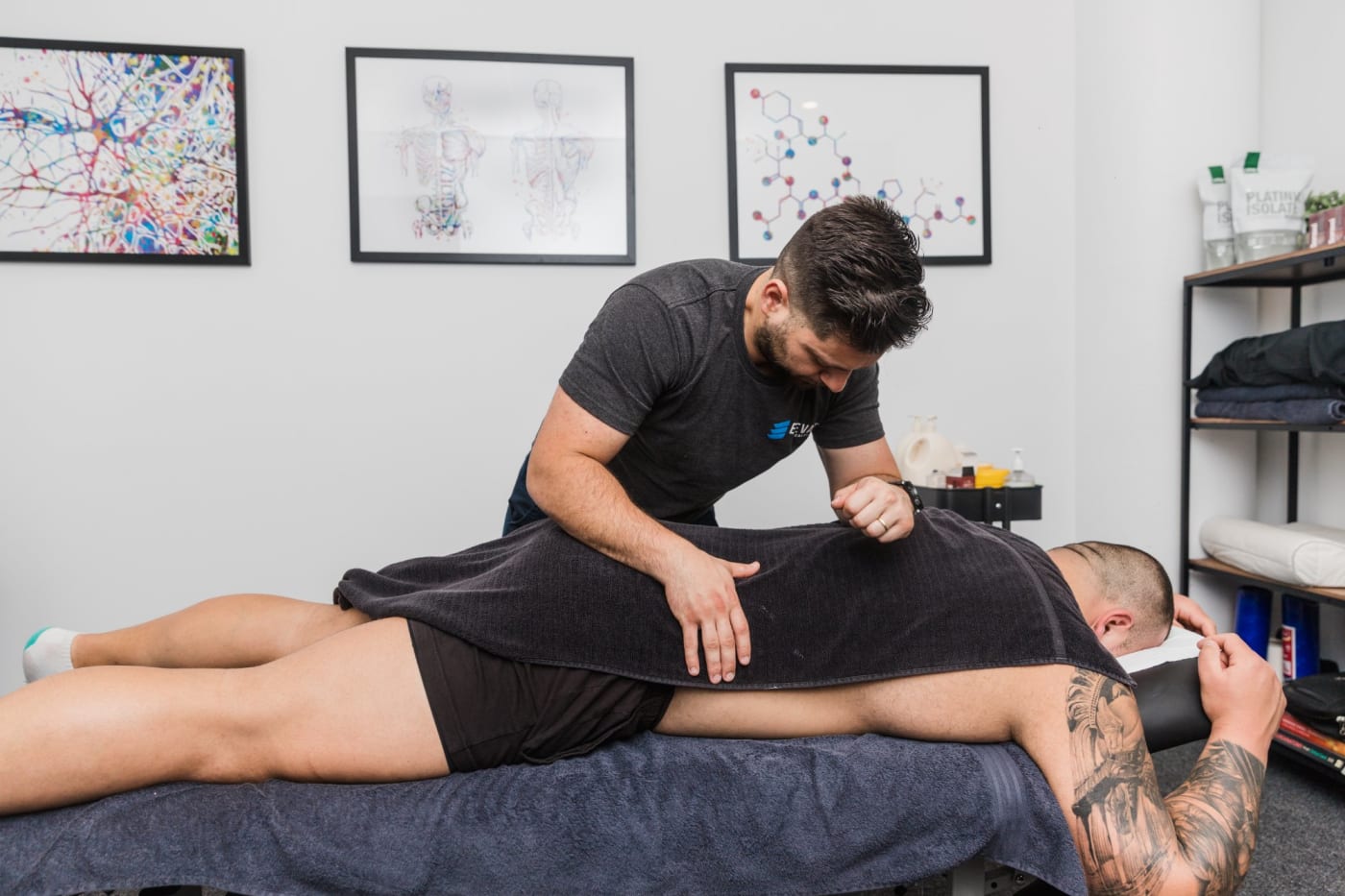
Sports injuries are frustrating, but the quality of your recovery — not just the severity of the injury — determines how quickly you get back to full performance. Here's what evidence-based sports injury rehabilitation looks like at Elevate Health Clinic.
The Stages of Tissue Healing
- Inflammatory phase (0–5 days): The body's initial response — increased blood flow, swelling, warmth and pain. This phase is necessary for healing to begin; suppressing it aggressively may delay recovery.
- Proliferation phase (5 days – 3 weeks): New collagen is laid down across the injury site. The tissue is being repaired but remains weaker than normal.
- Remodelling phase (3 weeks – 12+ months): The new collagen matures and reorganises along lines of mechanical stress. Progressive loading during this phase is critical — load guides the scar tissue to form in an organised, functional pattern.
Our Sports Injury Rehabilitation Approach
At Elevate Health, sports injury rehabilitation integrates chiropractic care to restore joint mechanics, exercise physiology to guide progressive loading through the remodelling phase, and physiotherapy for neuromuscular retraining. These disciplines work together rather than in sequence.
Return-to-Sport Protocols
Returning too early is the leading cause of re-injury. Our return-to-sport protocols use functional milestones rather than time-based criteria — you advance when you demonstrate the required strength, endurance and movement quality, not simply because a fixed number of weeks has passed.
Common Sports Injuries We Manage
- Ankle sprains and ligament injuries
- Hamstring strains
- Shoulder injuries (rotator cuff, AC joint)
- Knee ligament sprains (MCL, ACL post-surgery)
- Hip flexor and groin strains
- Lower back injuries from sport
Need help with this? Our team at Elevate Health Clinic in Bella Vista and Earlwood can assess and treat this condition. Book online or call us today.
Common Sports Injuries We Manage at Elevate Health
Our sports chiropractic and exercise physiology teams manage a broad range of sports-related presentations across the Hills District. Common injuries seen in clinic include:
- Lumbar disc and facet injuries — from contact sports, heavy lifting and high-impact activities
- Cervical sprains — whiplash and contact injuries in rugby, AFL and martial arts
- Shoulder impingement and rotator cuff strains — swimming, throwing sports, racquet sports
- Lateral ankle sprains — the most common sports injury across all codes
- Patellofemoral pain and IT band syndrome — running and cycling
- Hamstring strains — sprint-based sports
- Achilles and patellar tendinopathy — running and jumping sports
- Groin and hip flexor strains — multidirectional team sports
The DRS System and Sports Injury Rehabilitation
At Elevate Health, sports injury rehabilitation is structured through the Dynamic Resilience System™. The four stages — Review, Restore, Rebuild and Reignite — map directly to the phases of tissue healing and functional recovery. Assessment drives initial management (Review). Hands-on treatment reduces pain and restores movement (Restore). Progressive loading rebuilds strength and load tolerance (Rebuild). Sport-specific conditioning and return-to-performance work completes the programme (Reignite).
This framework ensures athletes are not discharged at symptom resolution — the most common failure point in sports injury management. The Reignite phase continues until the athlete can demonstrate the strength, speed, agility and psychological readiness required for full return to their sport. Book an assessment at our Bella Vista or Earlwood clinic to discuss your injury and how we can help you get back to performing at your best.
Getting Started with Sports Injury Care at Elevate Health
Whether you are managing a recent acute injury or a chronic sporting complaint that has been limiting your training, our team is available for same-day appointments at our Bella Vista and Earlwood clinics. No referral is needed. Private health HICAPS is available on-the-spot at both locations, and WorkCover referrals are accepted for chiropractic and exercise physiology. Call us on (02) 8883 0178 or book online — our team can discuss your injury and the most appropriate next step before you commit to an appointment.
Our sports chiropractic team in Bella Vista and Earlwood provides integrated sports injury management — combining assessment, hands-on treatment and progressive rehabilitation through our Dynamic Resilience System™. For information on what to expect from a rehabilitation programme, see our article on why injuries keep recurring and what proper rehab looks like. Our exercise physiology team handles the load progression and return-to-sport stages.
Frequently Asked Questions
How does chiropractic care help sports injury recovery?
Chiropractic care contributes to sports injury recovery primarily through restoring joint mobility, reducing muscle guarding and pain, and optimising movement patterns that may have been altered by injury. It is most effective as part of a broader rehabilitation plan that includes progressive loading and sport-specific conditioning.
How soon after a sports injury can I see a chiropractor?
In most cases, you can see a chiropractor within days of an acute sports injury — once the acute inflammatory phase has settled sufficiently for assessment and treatment. Early intervention is generally associated with faster recovery and lower risk of compensatory patterns developing.
Do I need imaging before seeing a chiropractor for a sports injury?
Not usually. A clinical assessment can determine the likely diagnosis and appropriate management for most sports injuries without imaging. Imaging is reserved for presentations where a fracture, significant ligament rupture or other serious pathology is suspected based on clinical findings.
References
- Bahr R & Krosshaug T. (2005). Understanding injury mechanisms: a key component of preventing injuries in sport. British Journal of Sports Medicine, 39(6), 324–329.
- Ardern CL, et al. (2016). 2016 Consensus statement on return to sport. British Journal of Sports Medicine, 50(14), 853–864.
- Rubinstein SM, et al. (2019). Spinal manipulative therapy for acute low back pain. Spine, 44(15), e882–e900.
Ready to Get Started?
Book an appointment with our experienced team — same-day availability, NDIS, WorkCover & private health welcome.
Book an Appointment